How to Trust More Wisely Even If You’ve Been Hurt Before
Introducing…
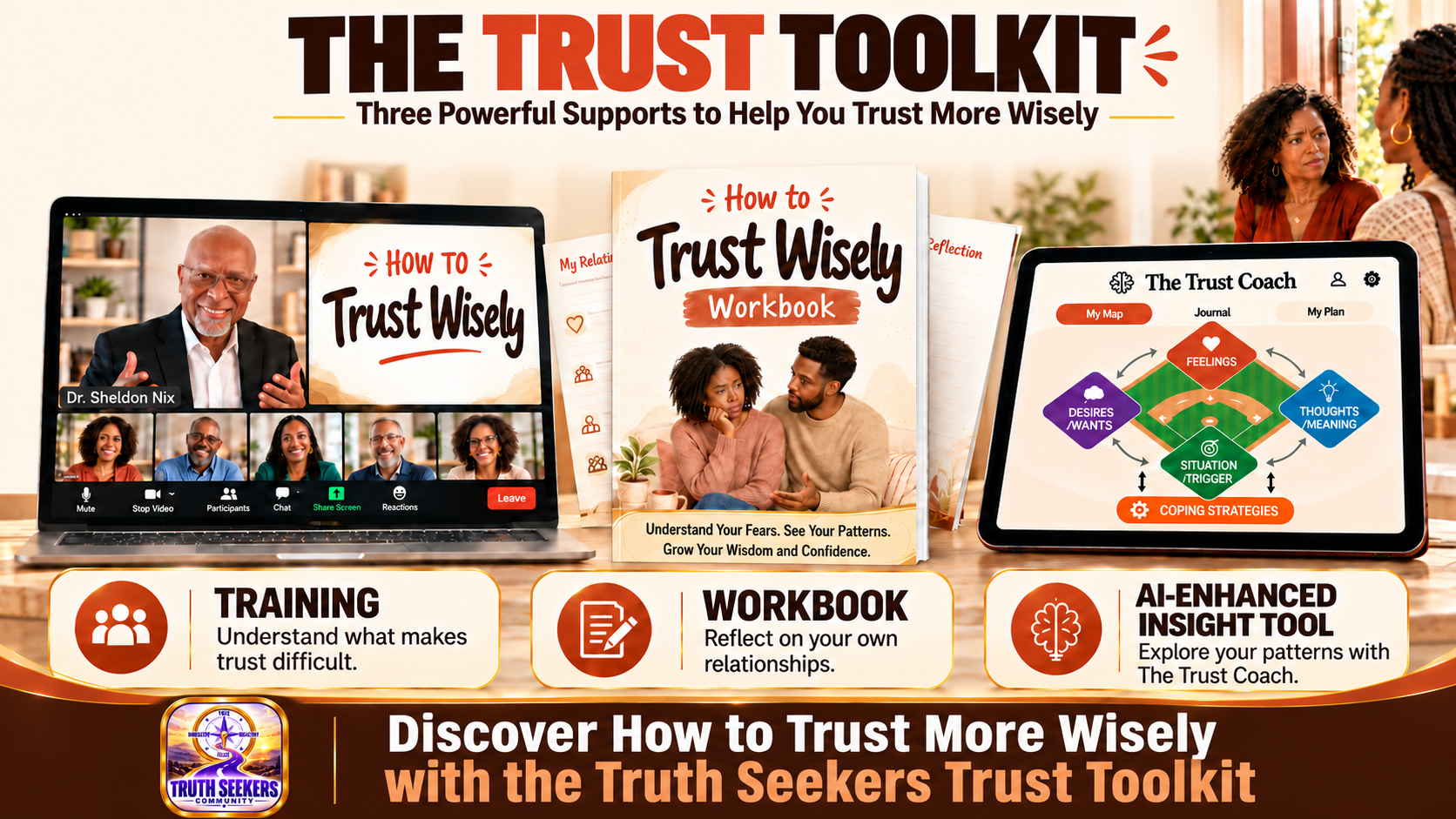
Whether you tend to trust too easily or find it hard to trust at all, it can leave you unsure what to look for. The Trust Toolkit gives you a short video training, a workbook, an AI coach for the late-night moments, live sessions and a caring community, so you can understand your patterns gently and trust at a pace that feels safe. Start today with the How to Trust Wisely Workbook, free.
Get the Free How to Trust Wisely Workbook
Get the How to Trust Wisely Workbook free, right away. The full toolkit is in our $9/month Skool community (7-day free trial).
The Difference
If trust has been hard, there’s a reason. And it isn’t that something is wrong with you.
Maybe you’ve wondered whether you keep choosing the wrong people. Or whether you’re somehow the problem. Those are painful questions, and if you’ve been carrying them, you’re not alone.
Here’s something that may help
When we’ve been hurt, our minds learn ways to protect us.
Some of us learn to:
- Let people in quickly and hope for the best
- Keep our guard up
- Swing back and forth between the two
- Freeze, unsure which way to go
Each of those patterns made sense at the time. They were trying to keep you safe.
The difficulty is that a protective pattern can start making decisions for us before we’ve had a real chance to see who’s in front of us. The Trust Toolkit helps you gently notice your pattern as it happens, so you can make choices at a pace that feels safe to you. Here’s what that difference can look like.
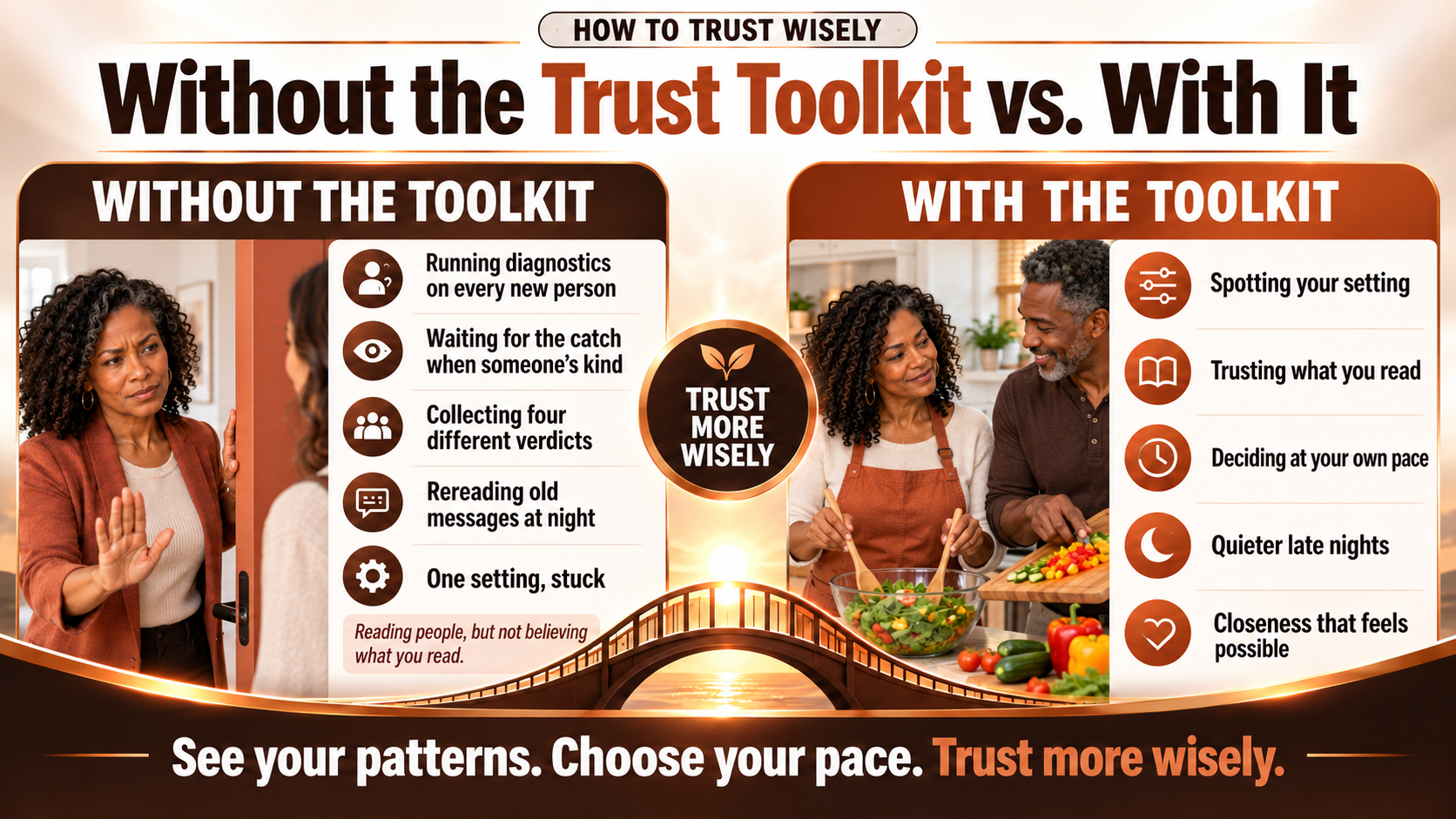
If the left side feels familiar, please be gentle with yourself. Those reactions aren’t flaws. They’re protection that has been working very hard for a long time.
Many people recognize themselves in moments like these.
Sound Familiar?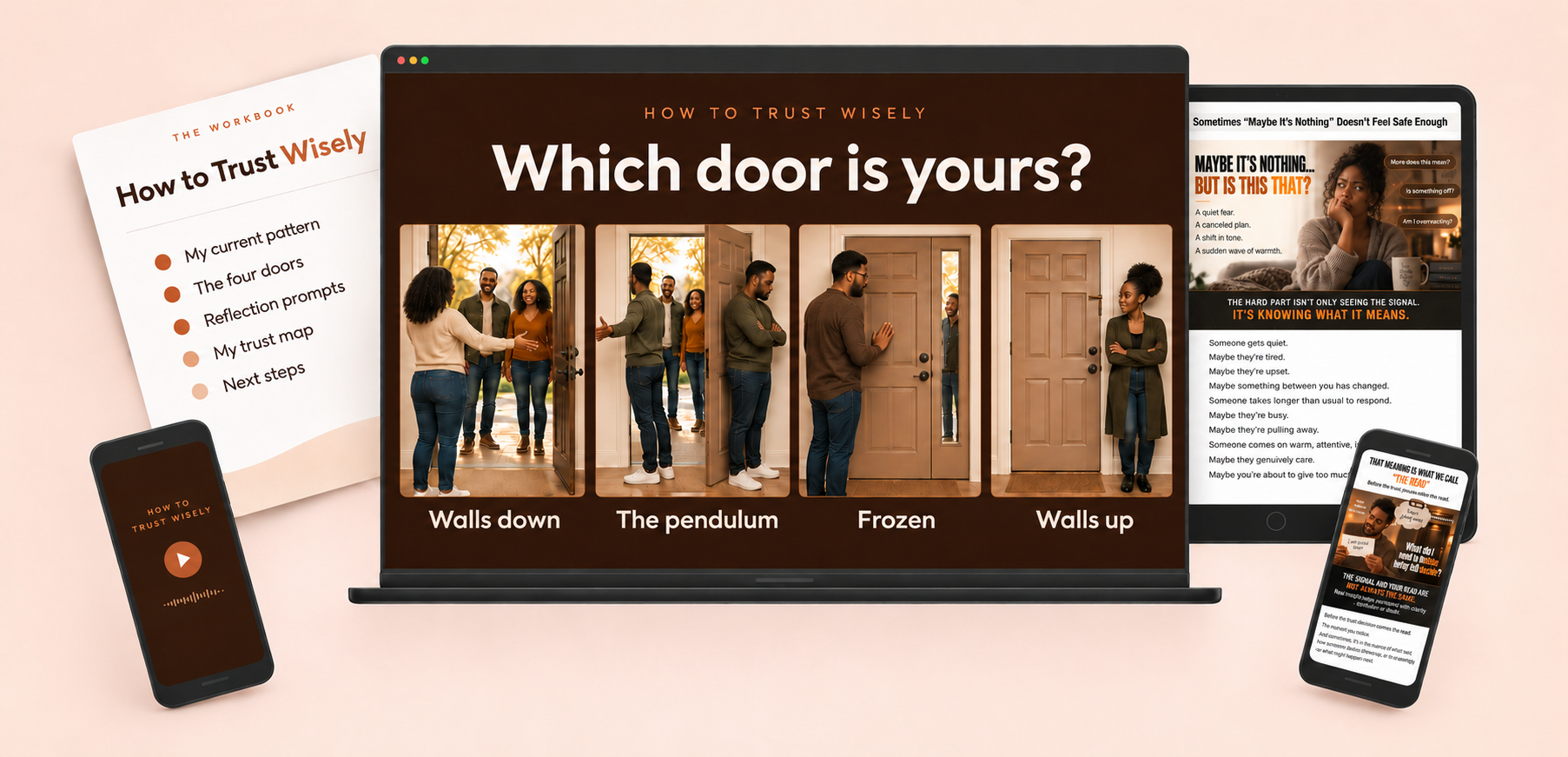
You haven’t stopped caring about people. You’ve stopped trusting your own judgment.
01Second-guessing someone newYou met someone kind and easy to talk to, and spent the whole drive home second-guessing it.
02Bracing when someone is kindSomeone at work is generous, and instead of enjoying it, part of you waits for the catch.
03Doubting your own opinionA friend asks what you think of the person she’s seeing, and you hold back, because after what happened, you’re not sure your opinion counts.
04Asking everyone elseYou’ve told the story to several people and gotten several different answers, and you still don’t know what you think.
05Replaying old messagesSome nights you find yourself rereading old messages, looking for what you might have missed.
06All in, then all outYou’ve gone from letting everyone in to letting no one in, and neither has felt like a real choice. It isn’t that your instincts are gone. It’s that they’re hard to trust right now.
…then this is for you
There’s a gentler way to trust again than guessing, or guarding.
Think of trust like a door. After we’ve been hurt, that door can get stuck in one position: wide open (walls down), swinging between open and shut (the pendulum), frozen in place, or closed tight (walls up). None of these is wrong. Each one once helped you cope. The trouble is when one position starts making every decision for you.
Right now, you’re probably doing what most people do after being hurt: watching for red flags, replaying old conversations, asking friends for their verdict, or quietly deciding not to let anyone close. It makes sense. You’re trying to keep yourself safe. But the door stays stuck, and you still don’t feel sure.
The Earned Trust Method gives you something different
A calm, step-by-step way to trust again at a pace that feels safe. You’ll learn to:
- Notice which door is answering, before it decides for you.
- Separate what’s happening now from what happened before, so old hurt doesn’t make every choice.
- See the person in front of you, not just the risk.
- Share a little and notice how it’s handled, so trust is earned over time.
- Choose how far to open the door, with confidence instead of fear.
I built this method on my 40+ years of psychology training and my work with people who’ve been hurt and want to trust again, so it’s grounded in real experience, not in quick fixes or red-flag checklists.
Dr. Sheldon Nix
The Shift
Here’s what can begin to change as you understand your pattern
Second-guessing every new person
You start to notice your pattern in the moment, before it decides for you, so you can actually see the person in front of you.
Replaying old messages
Once you understand what you were looking for, the late-night replaying often eases on its own.
Asking everyone for their opinion
You have a calm place to think things through, any time of night, without worrying about wearing out your friends.
Believing something is wrong with you
On paper it becomes clear: this is a pattern that started somewhere, and patterns can change.
Feeling like the only one
In the live sessions you hear others describe what you’ve felt, and the shame starts to loosen.
Thinking closeness isn’t for you
The kind of relationship where you can relax, without bracing for the worst, may be more possible than you think.
Introducing
The Trust Toolkit
The Trust Toolkit brings the Earned Trust Method to life through a short video training, the How to Trust Wisely workbook, the Trust Coach, live sessions and a caring community, so you can practice on real moments from your own life. It won’t tell you who to trust, and it won’t rush you. It gives you clarity, and the freedom to choose how far to open the door.
Get the Free How to Trust Wisely Workbook
Start with the free workbook. Join the full toolkit on Skool whenever you’re ready.
How It Works
Getting started takes 3 steps
1
Get the Free Workbook
Sign up below
2
Join the Community
$9/month on Skool
3
Grow at Your Pace
Training, coach, live sessions

The Story
Why I built the Trust Toolkit
Hi, I’m Dr. Sheldon Nix, a psychotherapist, pastor and life coach. In all three of those rooms I keep hearing the same quiet question: can I trust this person, and can I trust myself to know?
Ph.D.
Counseling Psychology
M.S.W.
Master of Social Work
40+
Years as a Psychotherapist
13
Years as a Pastor
What You Get
Here’s everything inside the Trust Toolkit
How it works
Start free. Go further whenever you’re ready.
- Free today: the How to Trust Wisely Workbook
- $9/month: the full toolkit, and many more
Sign up below and the How to Trust Wisely Workbook is yours right away. When you’re ready for everything else, join us in the Truth Seekers community on Skool for $9 a month, with a 7-day free trial. Cancel anytime. You’ll get all of the Trust Toolkit below, plus a growing library of toolkits like it.
One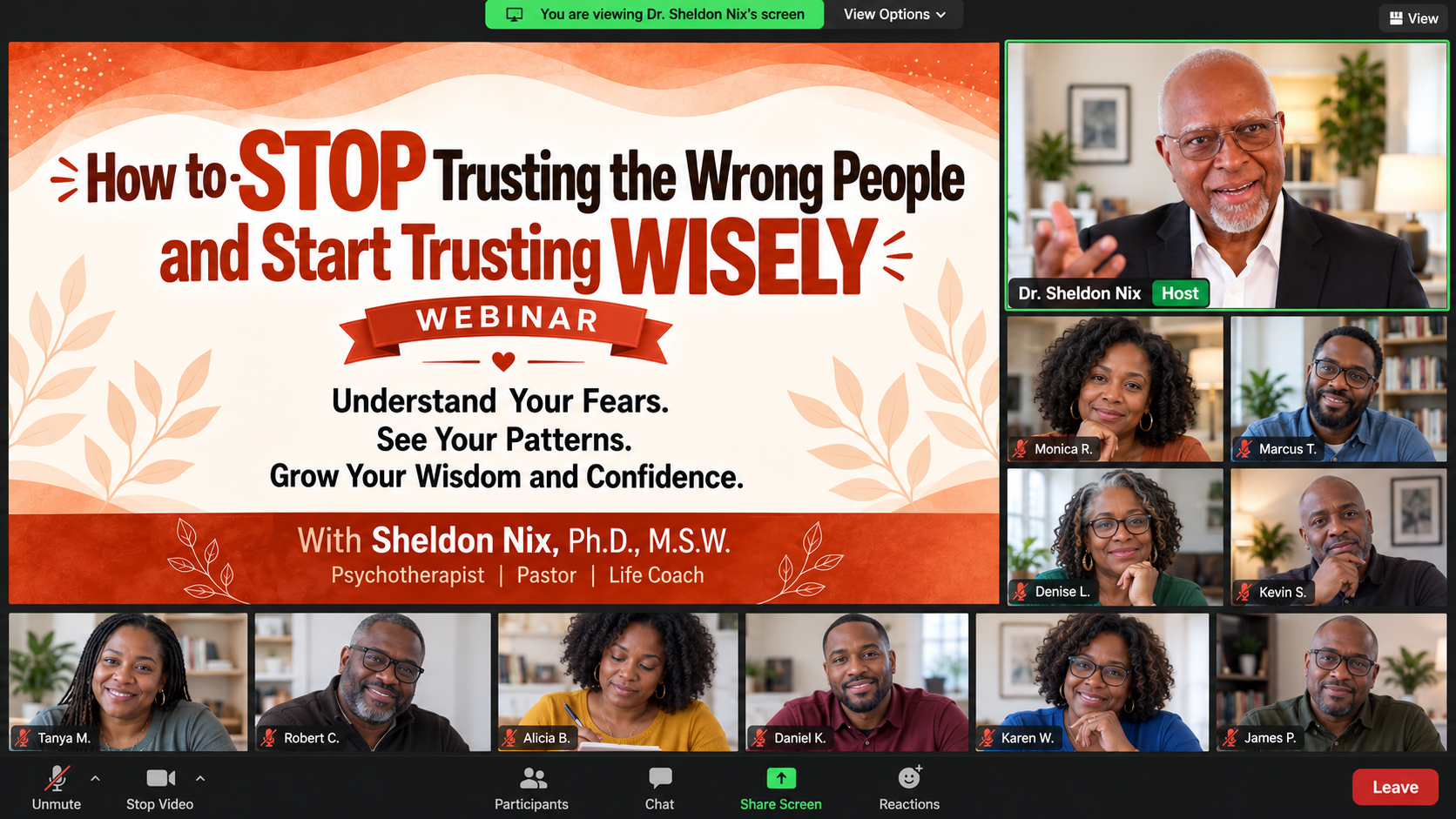
The Training: Understand the Four Settings, and Recognize Yours
This isn’t a personality label. It’s a skill you can learn. You’ll begin to notice the moment your pattern starts to respond, before you’ve decided anything about someone. Many people find the late-night replaying eases once they understand what was happening.
Video TrainingTwo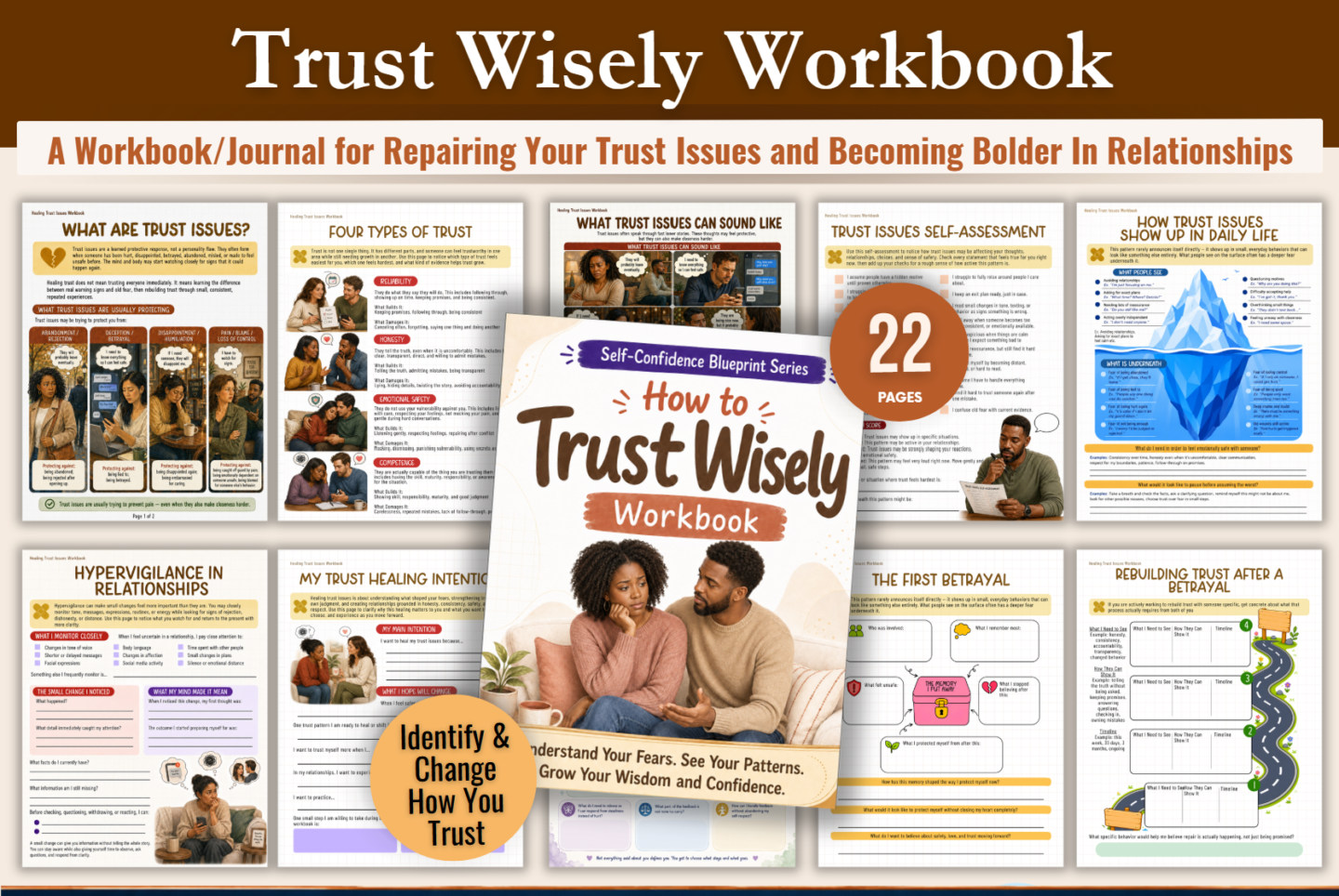
The Workbook: Your Own Door, Named
Gently work out which setting you tend toward, where it shows up most, and what helps it shift. Seeing it on paper can turn “something’s wrong with me” into “this is a pattern I can understand.”
Free Right AwayThree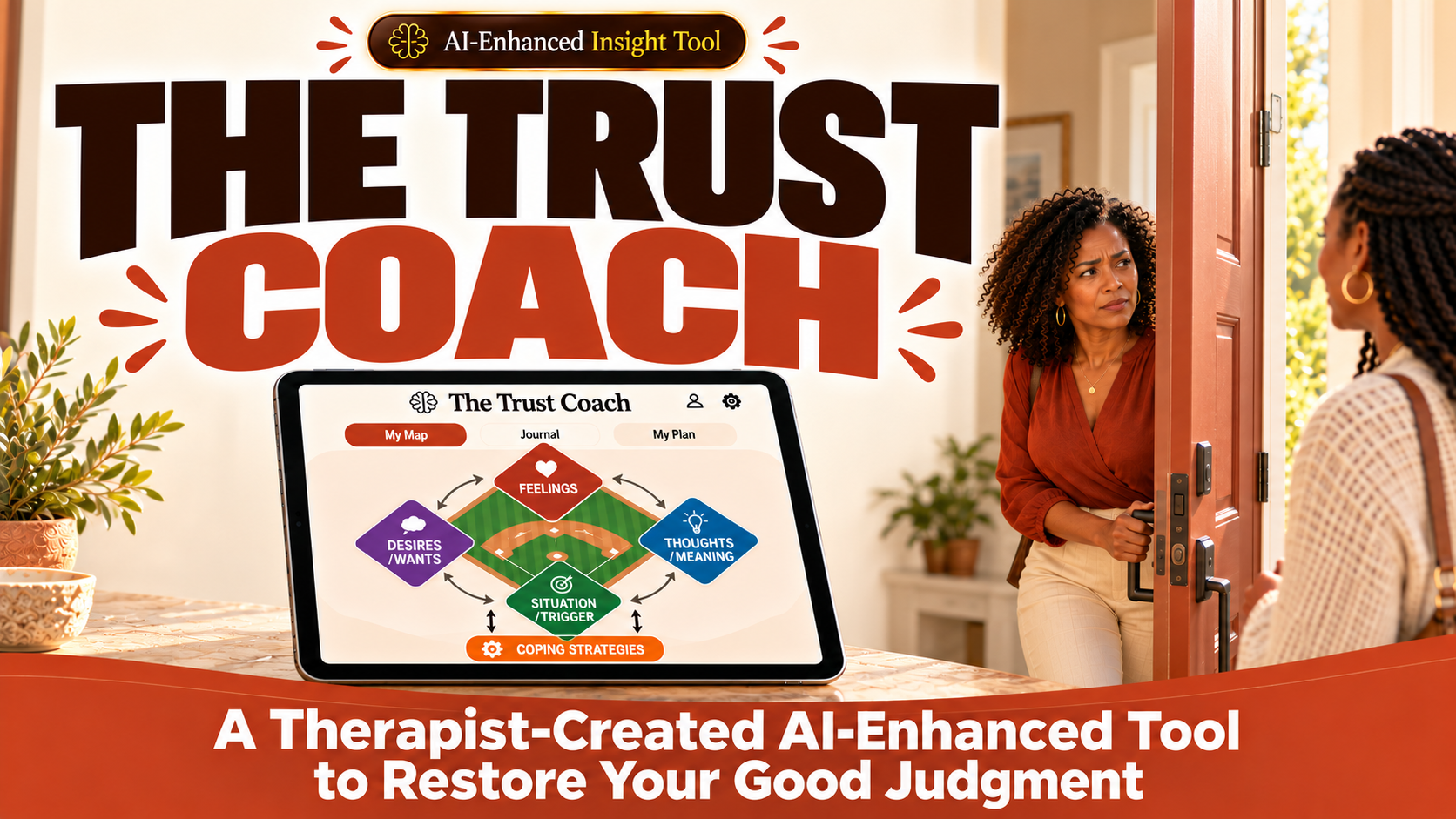
The Trust Coach: Somewhere to Think Things Through, Any Time
Hard moments rarely happen during business hours. If you’ve been asking friend after friend for advice and getting different answers, the Trust Coach gives you a calm place to sort through what you’re feeling, at your own pace.
AI-Enhanced Insight ToolFour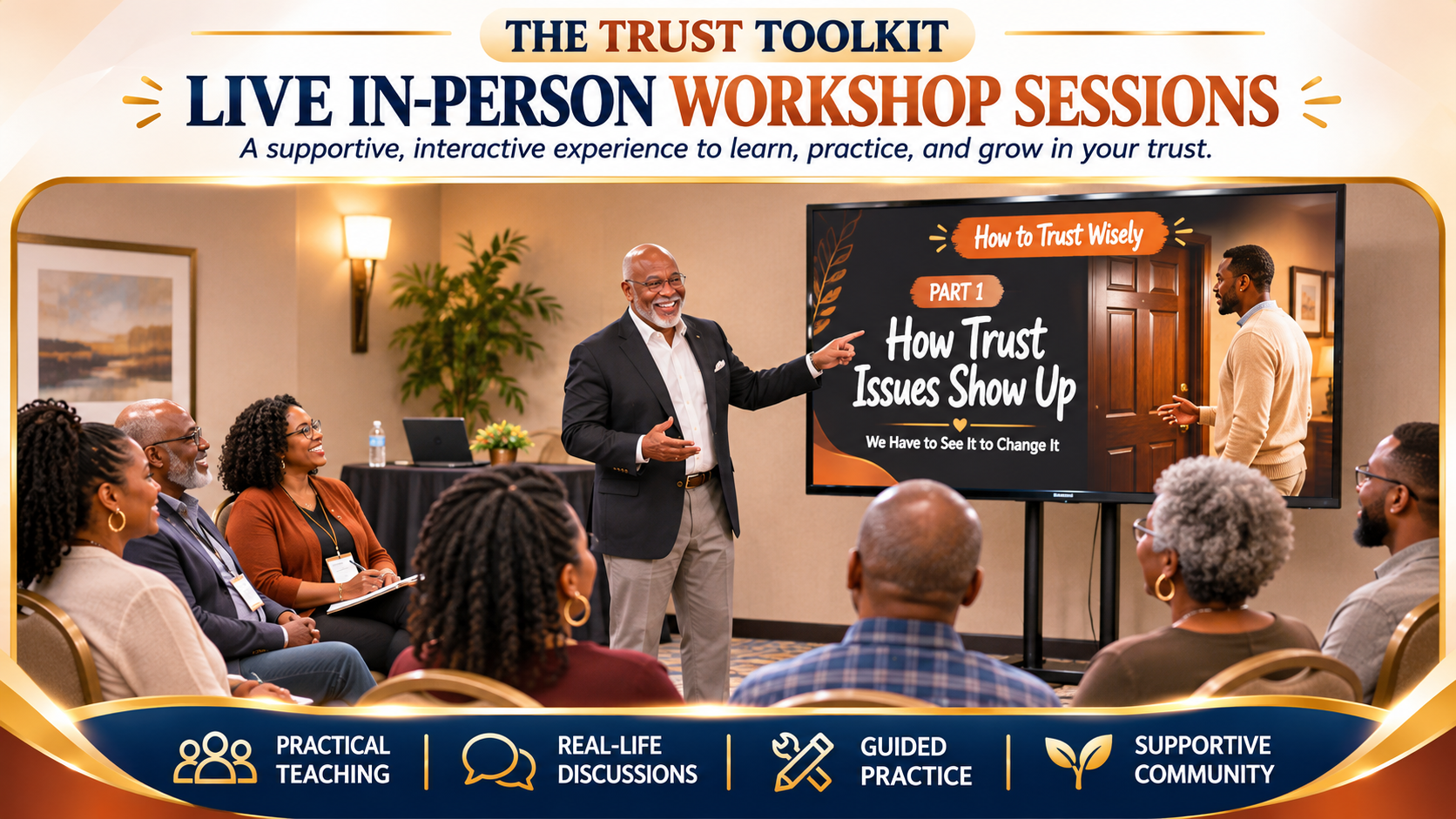
The Live Sessions: Your Questions, Answered with Care
Bring the situation you’ve been trying to sort out. You may find the other people there help as much as the answers. Hearing someone else describe what you’ve felt can make it feel far less lonely.
LiveFive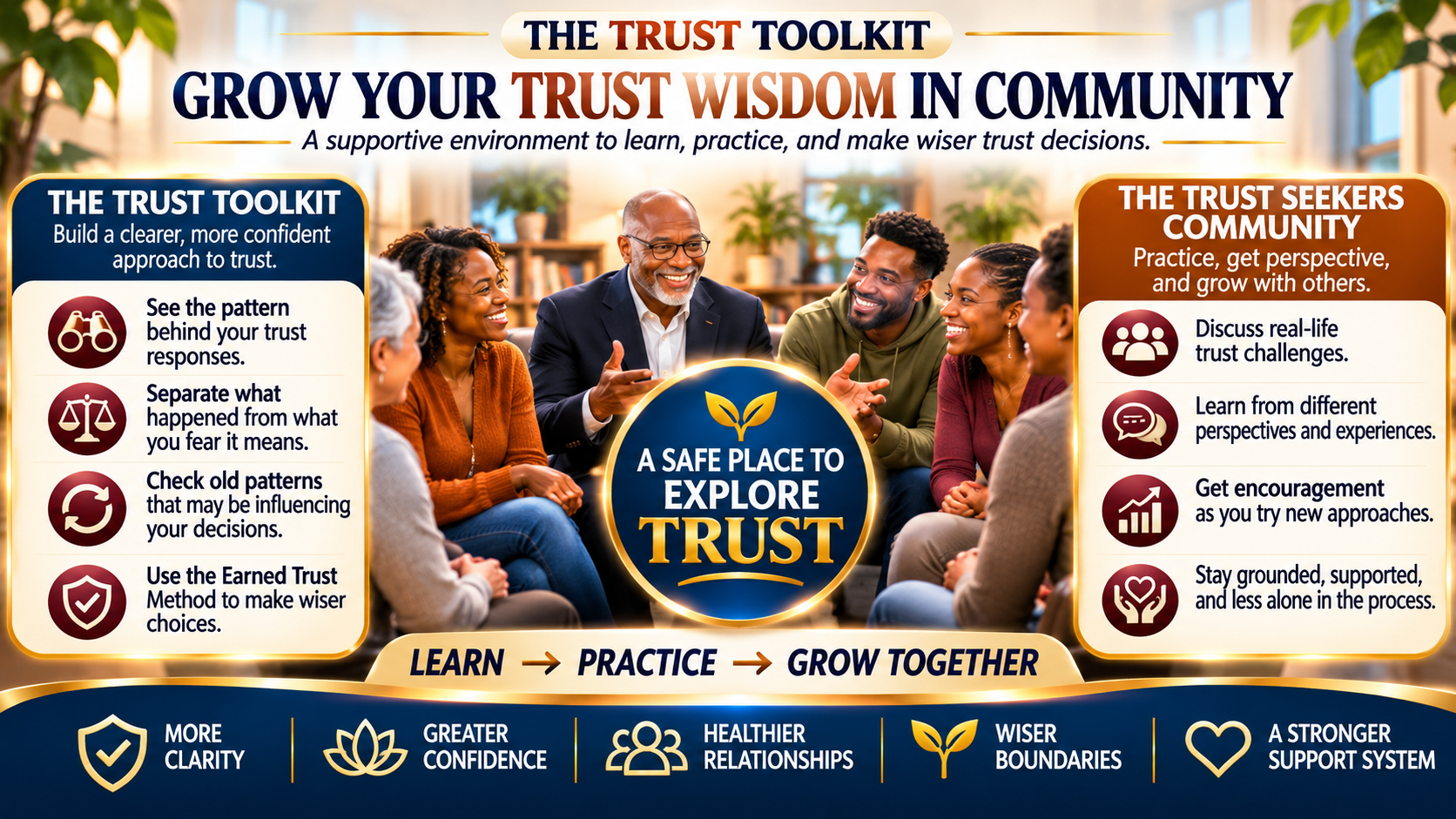
The Community: A Low-Stakes Place to Learn
Share as little or as much as you like. Notice how it’s received. Decide from there. That isn’t a workaround; it’s how trust is rebuilt, one small step at a time.
CommunityEverything You Get
The Trust Toolkit
Start with the How to Trust Wisely Workbook, free. Get everything in our $9/month Skool community.
The training: the four trust settings and how to recognize yoursIn Skool
How to Trust Wisely workbookFree Today
The Trust Coach, an AI-enhanced insight toolIn Skool
Live sessions: your questions, answered with careIn Skool
The community: a low-stakes place to learnIn Skool
Faith-based resources, if you want themIn Skool
Free
The How to Trust Wisely Workbook, yours right away
$9/mo
All of the Trust Toolkit, plus a growing library of toolkits, in the Truth Seekers community on Skool. 7-day free trial, cancel anytime.
Get the Free Workbook
Take it one small step at a time.
Questions
Frequently Asked Questions
What’s free, and what’s in the $9 membership?
The How to Trust Wisely Workbook is free. Sign up below and it’s yours right away.
The full toolkit, including the training, the Trust Coach, the live sessions and the community, is part of the Truth Seekers community on Skool for $9 a month, along with a growing library of other toolkits. It starts with a 7-day free trial, and you can cancel anytime. You can start with the free workbook and join whenever you’re ready.
Do I need to know which setting I default to before I start?
Not at all. Figuring that out is part of the journey. You don’t need to be sure this applies to you, and you don’t need to feel ready.
I tend to trust too easily. Or I find it hard to trust at all. Is this for me?
Yes. Walls down, the pendulum, frozen and walls up are four sides of the same experience. None of them is a flaw; each one helped you cope at some point. The Toolkit can help with whichever one feels stuck for you.
Is this only about romantic relationships?
Not at all. These patterns can show up anywhere trust matters: friendships, family, church, work, and new relationships of every kind.
What is the Trust Coach?
It’s an AI-enhanced insight tool for the moments when your mind won’t settle, which often aren’t during business hours. It helps you gently map what happened: the situation, your feelings, the meaning you made of it, what you needed and how you coped. It’s a support for reflection, not a replacement for a therapist.
Do I have to share my story in the live sessions or community?
Only as much as you’re comfortable with. You’re welcome to simply listen for as long as you like. Many people start small and share more as they feel safe.
Do I need to share a particular faith?
No. The Trust Toolkit is open to everyone, and nothing in it requires any particular belief. If faith is part of how you make sense of things, there are faith-based resources inside as well. It’s entirely your choice.
Is this therapy?
The Trust Toolkit is educational, so it isn’t a replacement for therapy or care from a licensed professional. If you’re working through something painful, or if a relationship involves your safety, please reach out to a therapist or local support services. You deserve that support.
Who is offering this?
The growing library of professional psychology-based resources like the Trust Toolkit, located in our Skool online community, is being provided to the Delaware community by Truth Seekers Fellowship Church, a vibrant group of Christian believers passionately pursuing spiritual and emotional growth, authentic relationships, and service to others with love and compassion.
It is designed for people who want to grow but may not be people of faith, or have a different faith. We get it. All of the resources are created by the psychology experts who are part of our community, like Dr. Sheldon Nix and Dr. Adamma Anyaehie‑Griffith. Some resources add the spiritual perspective to the psychological, since we think God created our minds and hearts. Take what helps, leave the rest!
You don’t have to decide anything to start.
You don’t need to be sure this applies to you, know your pattern, or feel ready.
Take whatever step feels right for you.
Start with the How to Trust Wisely Workbook. It’s free, and it’s yours right away.
The Trust Toolkit is educational and is not a substitute for therapy or professional care.
Let's Get Started!
Phone so we can send you information about our webinars, workshops, and other events.. Never rented or sold. Opt out any time.